How to Identify Genuine Leather — 5 Tests That Actually Work

Last updated: April 2026
Genuine leather has a distinct smell, texture, and behaviour that synthetic alternatives cannot fully replicate. The fastest way to tell real leather from fake: press your thumb firmly into the surface — genuine leather will wrinkle naturally and slowly spring back, the way skin does. PU or bonded leather shows no organic movement or wrinkles uniformly, like pressing plastic.
Below are five reliable tests you can perform before purchasing — or on items you already own.
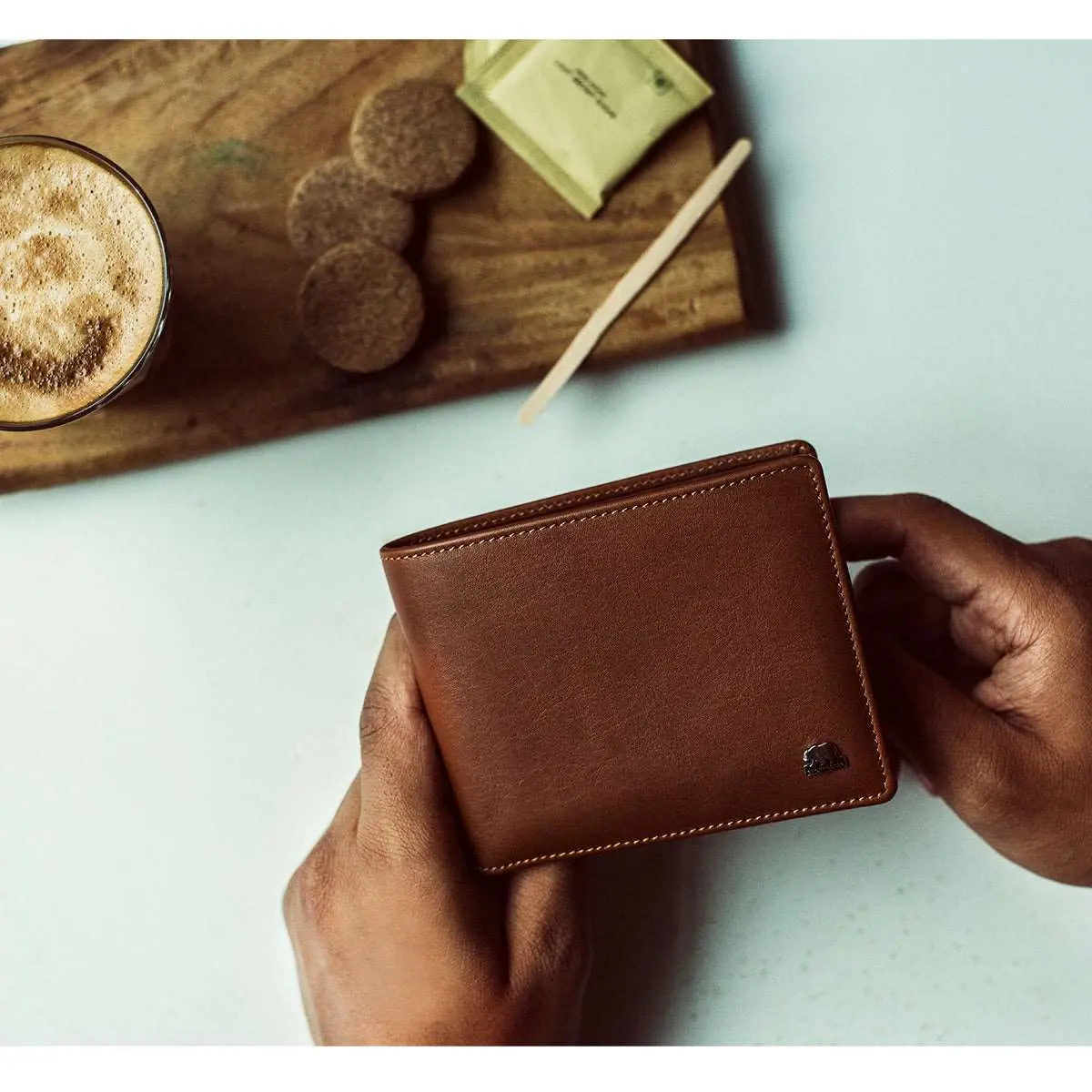
The 5 Tests to Identify Real Leather
1. The Touch and Wrinkle Test
Press your thumb into the surface and release. Genuine leather wrinkles like skin and recovers slowly. Faux leather either stays rigid or bounces back instantly like rubber. Run your palm across the surface — real leather has slight, irregular texture variations because it was once living hide. Perfect uniformity is a red flag.
2. The Smell Test
This is the most reliable non-destructive test. Real leather has a rich, earthy, slightly animal smell — distinct and complex. Synthetic leather (PU or PVC) smells like plastic, chemicals, or is odourless. The leather smell cannot be convincingly faked at scale; even "leather-scented" sprays fade within days.
3. The Edge Test
Look at the cut edges of the material (inside seams, wallet card slots, bag straps). Genuine leather edges show fibrous, layered material — rough and slightly fuzzy. Faux leather has clean, smooth, plastic-like edges because it's a coated fabric. If the edge looks machine-perfect, it's synthetic.
4. The Water Absorption Test
Place one small drop of water on an inconspicuous spot. Real leather absorbs water slowly, darkening slightly at the spot. The darkening disappears as it dries. Synthetic leather repels water almost entirely — the droplet beads up and sits on the surface. This works because leather is porous; synthetics are sealed coatings.
5. The Price Test
A full-grain leather wallet with quality stitching and hardware cannot be manufactured for under ₹400–600 in materials alone. If a "leather" product is priced under ₹500–800, it is not genuine leather. Premium full-grain leather wallets in India typically range ₹1,500–₹5,000. Price is not foolproof, but it eliminates the obvious counterfeits.
Genuine Leather vs Faux Leather — Quick Comparison
| Property | Genuine Leather | Faux / PU Leather |
|---|---|---|
| Smell | Rich, earthy, organic | Plastic or chemical |
| Texture | Irregular, organic variation | Uniform, machine-perfect |
| Edges | Fibrous, slightly fuzzy | Clean, smooth, plastic-like |
| Water reaction | Absorbs slowly, darkens | Repels, beads on surface |
| Wrinkle behaviour | Natural folds, slow recovery | Rigid or snap-back |
| Lifespan | 10–30 years with care | 2–5 years before peeling |
| Ageing | Develops patina, improves | Fades, cracks, peels |
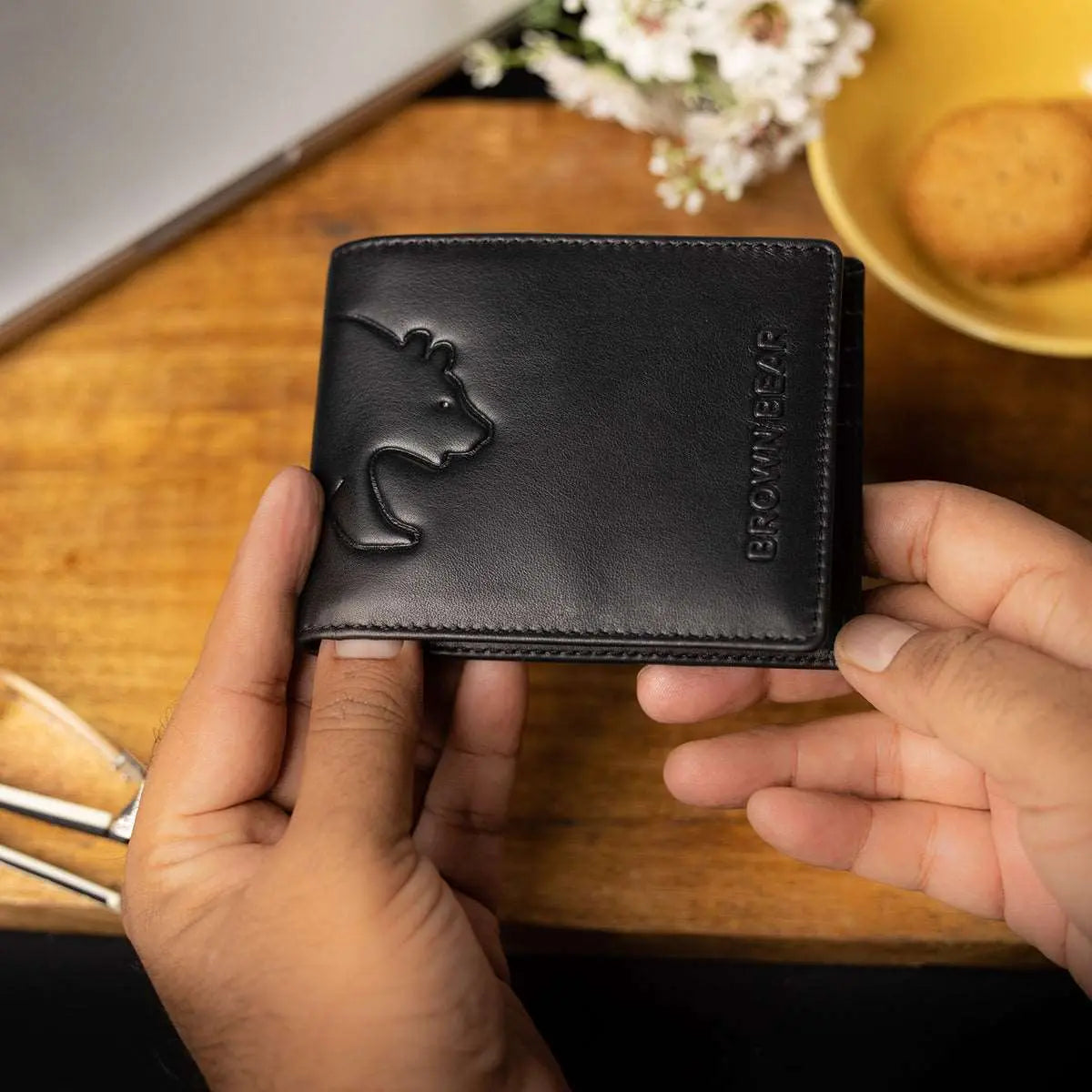
Leather Grades: Not All "Genuine Leather" Is the Same
Even within real leather, quality varies significantly by grade. Full-grain leather (the top, unaltered layer of the hide) is the most durable and develops a rich patina over decades. Top-grain leather is sanded smooth — still high quality, but without the character. "Genuine leather" as a label typically means lower-grade split leather — technically real, but weaker and less durable than full-grain or top-grain.
At Brown Bear, all products use full-grain or top-grain leather sourced and handcrafted in Kolkata — the same material used in legacy European leather goods. See our men's leather wallets and women's leather wallets for the difference in hand.
Frequently Asked Questions
Can you identify real leather without the smell test?
Yes. The edge test and wrinkle test are highly reliable without any smell. Look at cut edges for fibrous material, and press the surface — organic wrinkle behaviour is very difficult to fake convincingly in consumer goods.
Is bonded leather real leather?
Technically yes — bonded leather contains 10–20% genuine leather fibres ground up and bonded with polyurethane. In practice, it performs like synthetic leather: it peels within 2–4 years and develops no patina. Avoid it for wallets, bags, or belts.
Does genuine leather always have a grain pattern?
Not always. Smooth (nappa) leathers have been buffed to remove visible grain. The absence of grain pattern doesn't mean fake — check edges and smell instead.
What does "PU leather" mean?
PU leather is polyurethane-coated fabric — entirely synthetic. It's not leather by any definition, despite being marketed as "vegan leather" or "synthetic leather." It typically lasts 2–4 years before the coating separates from the fabric base.
Is genuine leather sustainable?
Full-grain leather is a byproduct of the meat industry — the hide would otherwise go to waste. A quality leather wallet or bag lasting 20+ years has a significantly lower lifetime environmental impact than replacing three or four synthetic alternatives over the same period.
0 comments