Full-Grain vs Top-Grain vs Genuine Leather: What's the Real Difference?

Last updated: April 2026
Full-grain leather is the highest quality grade, made from the outermost layer of the hide with all natural markings intact. Top-grain has the surface sanded to remove imperfections — still durable, but without the character. "Genuine leather" is a term that sounds premium but actually refers to a lower-grade split — technically real leather, made from the weakest inner layers of the hide. Understanding these grades is the single most important thing you can do before buying a leather wallet, bag, or belt.
Leather Grades at a Glance
| Grade | Layer Used | Surface | Durability | Patina |
|---|---|---|---|---|
| Full-grain | Outermost, unaltered | Natural grain intact | Highest — 20–40 years | Develops richly with use |
| Top-grain | Top layer, surface sanded | Uniform, consistent | High — 10–20 years | Minimal patina |
| Genuine leather | Split (inner layer) | Embossed grain pattern | Moderate — 3–5 years | None |
| Bonded leather | Scraps + polyurethane | Uniform, plastic-feeling | Low — 2–3 years | None — peels and cracks |
Full-Grain Leather
Full-grain leather uses the entire thickness of the outermost hide layer — natural grain, scars, marks and all. Nothing is sanded away. This makes it the densest, most breathable, and most durable grade of leather available. Because the fibre structure is completely intact, full-grain leather grows more beautiful with age, developing a patina — a warm, darkened lustre from natural oils and handling — that no other material can replicate.
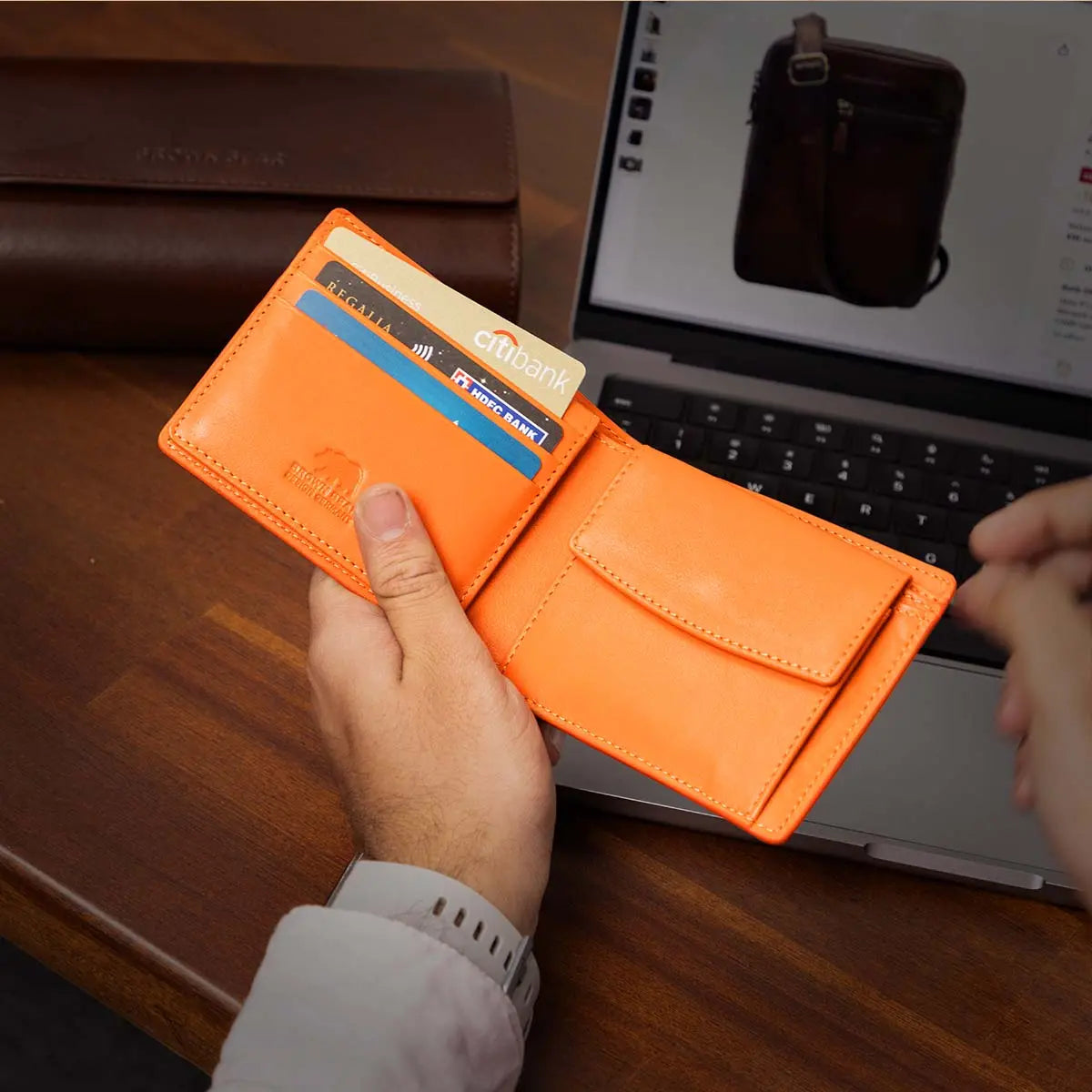
Hermès, Louis Vuitton, and Ettinger all use full-grain leather for their premium lines. The same material is used in Brown Bear's men's leather wallets — handcrafted in Kolkata from full-grain hides.
Best for: Wallets, card holders, belts, bags — anything you intend to keep for 10+ years.
Top-Grain Leather
Top-grain leather is the second-highest grade. The top layer of the hide is split and then sanded (buffed) to remove natural marks and imperfections, creating a uniform surface that's easier to work with at scale. A finish coat is applied to give it a consistent appearance.
The result: leather that looks cleaner and more "perfect" out of the box than full-grain, but loses some of the natural fibre density in the sanding process. Top-grain leather is still excellent for everyday use — most mid-to-premium leather goods use it. It will not develop the same depth of patina as full-grain, but it remains durable and maintains its appearance well over a decade with proper care.
Best for: Bags, office accessories, structured goods where a consistent finish matters.
Genuine Leather — The Marketing Trap
"Genuine leather" sounds like it means real, quality leather. It doesn't — it means the opposite within the grading system. Genuine leather is made from the split, the inner layer that remains after the top-grain is separated from the hide. It's the weakest, most porous part of the hide. To give it structure, manufacturers coat it heavily with synthetic finishes or stamp an artificial grain onto it.
Products labelled "genuine leather" are technically real leather. But they're the lowest rung of real leather. They won't develop patina, they're more susceptible to moisture and cracking, and they typically last 3–5 years under normal use before the finish starts to peel or crack.
If a brand prominently advertises "genuine leather" as a selling point, it's often a sign they're using the lowest acceptable grade.
Bonded Leather — Avoid
Bonded leather is to leather what particle board is to solid wood. It's made by grinding leather scraps and fibres, mixing them with a polyurethane binder, and rolling the paste onto a paper or fabric backing. The result contains as little as 10–20% actual leather by content.
Bonded leather typically peels and cracks within 2–3 years — the polyurethane surface separates from the backing as the binder degrades. It develops no patina and cannot be conditioned or repaired meaningfully. Avoid it entirely for wallets, bags, or belts.

Which Grade Should You Choose?
For a wallet you intend to use daily for years: Full-grain, always. The density of the fibre structure means it handles the daily friction of pocket use better than any other grade. A good full-grain wallet can last 15–25 years. Brown Bear's men's wallets and women's wallets are all full-grain or top-grain — no genuine leather or bonded.
For a laptop bag or messenger bag: Full-grain or top-grain. Structured bags benefit from the consistency of top-grain; unstructured or slouchy bags develop better character in full-grain. See our leather laptop bags.
If the price is under ₹800 for a wallet: It's not full-grain. Probably not top-grain either. Price is a reliable proxy for material quality in leather goods.
Frequently Asked Questions
Is full-grain leather always better than top-grain?
For longevity and patina development, yes. For consistency of appearance and ease of care, top-grain can sometimes be preferred — it's more uniform and slightly more resistant to surface staining. Both are high-quality grades; the difference is character versus consistency.
Why do brands label low-quality leather as "genuine leather"?
Because "genuine leather" is technically accurate — it is real leather — and sounds premium to uninformed buyers. There's no industry-wide regulation requiring brands to specify the grade. Always ask specifically: is this full-grain, top-grain, or split leather?
Can you tell the difference between full-grain and top-grain by looking?
In most finished goods, not easily. Full-grain will often show natural marks or slight variation across the surface. Top-grain will look more uniform. The clearest indicator is how the leather ages — full-grain develops a visible patina, top-grain stays relatively consistent.
Does full-grain leather require more maintenance?
Slightly, yes — because it's more porous (the natural grain is open, not sealed), it benefits from conditioning every 3–6 months. Top-grain and genuine leather have sealed surfaces that are less absorbent but also can't be nourished as effectively. See our guide on how to care for a leather wallet.
What leather does Brown Bear use?
Brown Bear uses full-grain and top-grain leather sourced and handcrafted in Kolkata. We do not use genuine leather (split), bonded leather, or any synthetic alternatives. Every product page specifies the leather type used.
0 comments