How to Care for a Leather Wallet — Complete Guide

Last updated: April 2026
A quality leather wallet, maintained correctly, lasts 15–25 years — sometimes longer. The routine is simple: wipe monthly with a soft damp cloth, condition every 3–6 months with a proper leather conditioner, and store it flat when not in use. The single biggest mistake people make is overstuffing — more than 10 cards permanently warps the leather and breaks the stitching within 18–24 months.

Daily Care — What to Do Every Day
Daily leather care requires almost nothing. Keep the wallet out of your back pocket if possible — sitting on it repeatedly distorts the shape and creates uneven wear. Front pocket carry is better for the leather's structure. Avoid leaving it in direct sunlight (on a car dashboard, near a window) — UV degrades the dye and dries the leather from the outside in.
Don't overstuff it. Leather stretches permanently under sustained pressure. 8 cards is the practical limit for most slim wallets; more than that and the spine stitching takes stress it wasn't designed for. If you're carrying more than 8 cards daily, use a card holder as a secondary wallet.
How to Clean a Leather Wallet — Step by Step
Clean your wallet once a month, or whenever it looks visibly dirty.
- Empty the wallet completely — remove all cards, receipts, and cash. This lets the leather relax to its natural shape and makes cleaning easier.
- Wipe with a dry microfibre cloth — remove surface dust and loose particles before introducing any moisture.
- Dampen a second cloth with clean water — the cloth should be barely damp, not wet. Wipe in gentle circular motions across the leather surfaces. Don't scrub.
- For stubborn stains, use a leather cleaner — apply a small amount of dedicated leather cleaner (not soap, not baby wipes) to the cloth, not directly to the leather. Wipe gently and let dry naturally.
- Air dry at room temperature — never use a hairdryer, radiator, or direct sunlight to speed drying. Heat causes leather to stiffen and crack.
What to use: Leather cleaner (Leather Honey, Bickmore, or Collonil brands are reliable). What not to use: baby wipes (alcohol content dries leather), regular soap (strips natural oils), petroleum-based products (clogs pores).
How to Condition a Leather Wallet
Conditioning replenishes the natural oils that keep leather supple and crack-resistant. Full-grain leather should be conditioned every 3–6 months; top-grain every 6 months. Over-conditioning is possible — if leather feels greasy or stops absorbing conditioner, you're conditioning too frequently.
- Clean the wallet first — conditioning over dirt seals it in. Always clean before conditioning.
- Apply a small amount of conditioner to a soft cloth — not directly to the leather. A pea-sized amount covers an entire wallet.
- Rub in circular motions — work the conditioner into the grain, including seams and corners where drying typically starts.
- Let it absorb for 15–20 minutes — the leather will darken slightly (this is normal and temporary).
- Buff off any excess with a clean dry cloth. If the leather looks greasy after buffing, you've applied too much.
Recommended conditioners: Leather Honey, Bickmore Bick 4, Collonil 1909. Avoid: Vaseline, olive oil, coconut oil (these can go rancid inside the leather), shoe polish (adds unwanted pigment), and wax-only products (coat without nourishing).
Storage
When storing a leather wallet long-term (weeks or months without use), keep it in a breathable cloth or dust bag — not a plastic bag, which traps moisture and encourages mildew. Store in a cool, dry place away from direct light. If the wallet has metal hardware, wrap it loosely to prevent the hardware from pressing into and marking the leather.
If the wallet gets completely wet (rain, spill), stuff it lightly with paper to help it hold its shape as it dries, and let it dry at room temperature. Once fully dry, condition immediately — water removes oils from leather as it evaporates.
Quick Reference — Dos and Don'ts
| Do | Don't |
|---|---|
| Wipe monthly with a barely damp cloth | Use baby wipes or regular soap |
| Condition every 3–6 months | Apply conditioner more than 4x/year |
| Carry in front pocket when possible | Sit on it daily in your back pocket |
| Air dry at room temperature | Use a hairdryer or radiator to dry it |
| Store in a dust bag long-term | Store in a sealed plastic bag |
| Limit to 8–10 cards maximum | Overstuff — it permanently warps the leather |
| Use a proper leather cleaner for stains | Apply oil, Vaseline, or coconut oil |
| Condition after getting it wet | Leave in direct sunlight to dry |
How Leather Changes Over Time
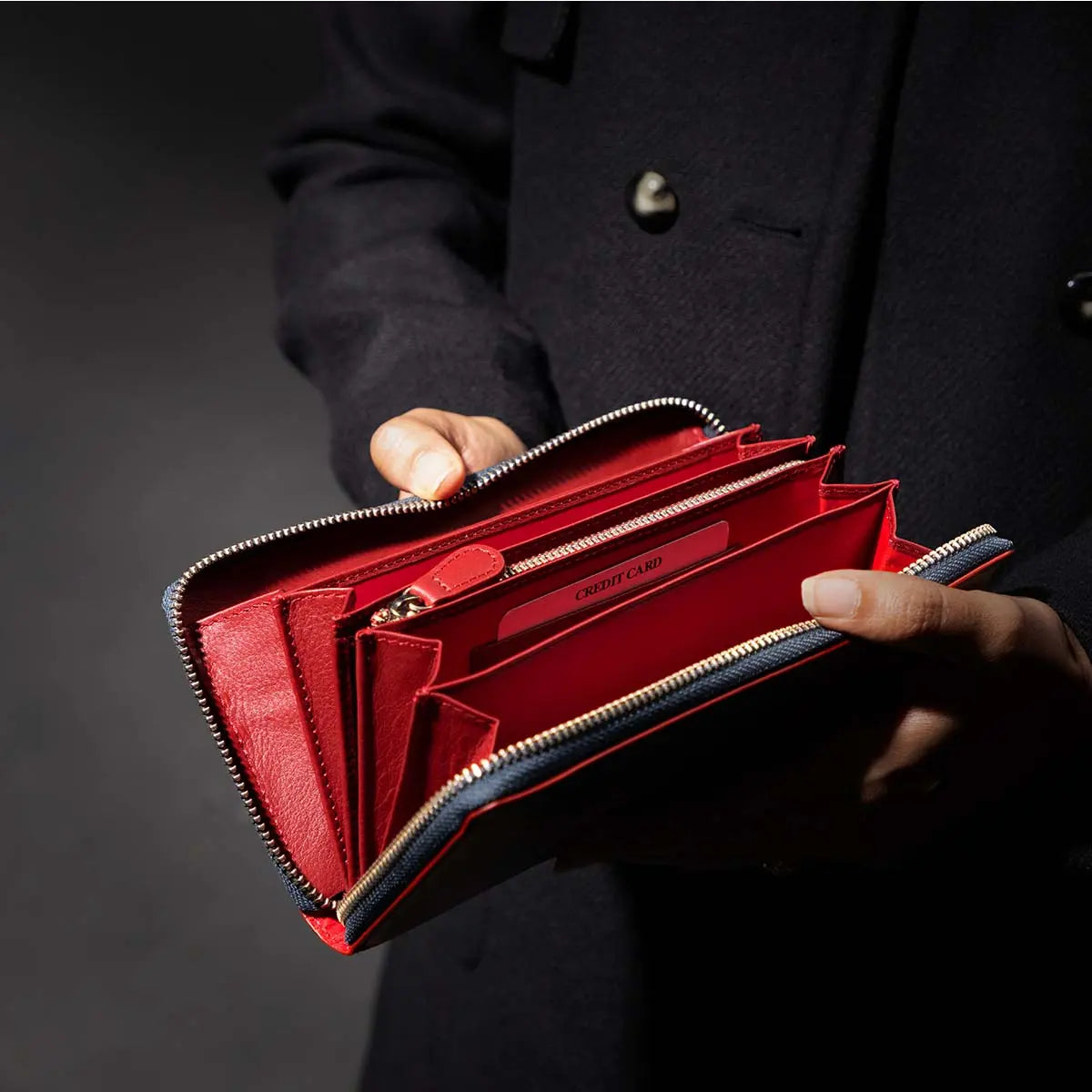
Quality full-grain leather develops a patina — a deepening of colour, warmth, and lustre that comes from natural oils, handling, and use. This is not damage; it's the leather maturing. A 10-year-old full-grain wallet that's been cared for looks significantly better than a new one. This is the fundamental difference between real leather and synthetics: leather improves, synthetics deteriorate.
If you're looking for a wallet designed to last decades, Brown Bear's men's leather wallets and women's leather wallets are made from full-grain leather with hand-finished edges — built to be cared for and kept.
Frequently Asked Questions
How often should I condition my leather wallet?
Every 3–6 months for full-grain leather; every 6 months for top-grain. If you live in a dry climate or the leather starts to feel stiff, condition sooner. If you live in a humid climate, you may need to condition less frequently.
My leather wallet got wet in the rain — what do I do?
Pat off excess water with a dry cloth (don't rub), stuff lightly with tissue paper to maintain shape, and leave it to dry naturally at room temperature. Once completely dry (24–48 hours), apply a leather conditioner. Do not use heat sources to speed drying.
Can I use coconut oil or olive oil to condition leather?
Not recommended. Natural food oils can go rancid inside the leather over time, causing an unpleasant smell and potentially weakening the fibres. Use a purpose-formulated leather conditioner instead.
How do I remove a pen mark or ink stain from leather?
Act quickly. Dab (don't rub) the stain with a clean cloth. For stubborn ink, a small amount of rubbing alcohol on a cotton swab applied carefully to the stain — not the surrounding leather — can lift it. Test on an inconspicuous spot first. Once removed, condition the area to restore moisture.
Does leather care differ for wallets vs. bags?
The principles are the same — clean, condition, store properly. Bags typically need conditioning less frequently because they have more total leather surface relative to the stress points, but areas that flex repeatedly (handles, straps, corners) may need more attention. See our full Leather Care Guide for bags and accessories.
What's the best leather conditioner for Indian climate conditions?
In India's humid climate, a lighter conditioner like Bickmore Bick 4 or Leather Honey (applied sparingly) works well — it nourishes without over-softening. In drier climates (winter in North India), you may need to condition more frequently. Avoid heavy wax-based conditioners in high-humidity environments.
0 comments